



-
 Uncategorized
-
 0 Comments
Hail Damage Roof Repair: What You Need to Know
Protect Your Spring, TX Home Today
How Hailstones Compromise Your Roof’s Integrity
When severe weather strikes Spring, TX, hail can inflict significant damage to your roofing system within minutes. Understanding how hailstones compromise your roof helps homeowners recognize when professional intervention becomes necessary.
Hailstones vary in size from small pellets to golf ball-sized projectiles, and each impact creates unique damage patterns. Asphalt shingles, the most common roofing material in the Spring area, are particularly vulnerable to hail impact. The force of hailstones creates bruising on shingle surfaces, dislodges protective granules, and can crack or puncture the underlying material.
During spring and early summer months in Spring, TX, when severe thunderstorms frequently develop across the region, hail damage becomes a pressing concern for property owners. The humidity and temperature fluctuations typical to our area can accelerate deterioration once the protective layer of shingles becomes compromised.
Beyond visible surface damage, hail impacts can compromise the structural integrity of your entire roofing system. The protective granules that cover asphalt shingles serve multiple functions: they shield against UV rays, provide fire resistance, and contribute to water shedding. When these granules become dislodged by hail, your roof loses critical protection and becomes susceptible to premature aging, water infiltration, and accelerated wear.
Visual Indicators Every Homeowner Should Recognize
Detecting hail damage early prevents minor issues from escalating into costly structural problems. Many homeowners miss the early warning signs because damage may not always be immediately obvious from ground level.
Start your inspection by examining your gutters and downspouts. Dented gutters or downspouts often indicate that hail was large enough to damage your roof as well. Check for granule accumulation in gutters, which appears as dark, sand-like material. Excessive granule loss signals that your shingles have sustained impact damage and are shedding their protective coating.
From the ground, look for visible signs on your roof surface. Shingles may appear bruised, with dark spots where impacts have occurred. You might notice missing shingles, curled edges, or areas where shingles have become displaced. Cracked or split shingles are clear indicators of hail impact, particularly when cracks appear in a random pattern across the roof rather than in predictable wear patterns.
Interior signs deserve equal attention. Water stains on ceilings or walls, especially after storms, suggest that your roof’s waterproofing barrier has been breached. Leaks may not appear immediately after a hailstorm; sometimes water damage becomes evident weeks or even months later as compromised areas gradually fail.
Check other exterior elements as well. Damaged window screens, dented air conditioning units, or chipped paint on siding often accompany roof damage from the same storm event. These corroborating signs help establish the extent and severity of hail impact on your property.
What to Expect During a Thorough Assessment
Professional roof inspections provide the detailed assessment necessary for accurate damage documentation and successful insurance claims. When you schedule an inspection, qualified contractors follow systematic procedures to evaluate every aspect of your roofing system.
The inspection begins with a visual examination from ground level, noting obvious damage to gutters, fascia, and visible roof sections. Contractors then access the roof to perform hands-on evaluation, carefully walking the surface to identify impact points, measure damage severity, and document compromised areas.
Inspectors examine multiple components beyond just shingles. They assess flashing around chimneys, vents, and skylights for dents or displacement. Roof penetrations receive particular attention because these areas are especially vulnerable to water infiltration when storm damage occurs. Ridge caps, hip shingles, and valley sections are scrutinized for impact damage that might compromise water channeling.
Professional inspectors document their findings with photographs, measurements, and detailed notes. This documentation becomes critical when filing insurance claims, as it provides verifiable evidence of storm-related damage. Many contractors use specialized tools to measure hail impact size and depth, creating objective records that support claim submissions.
At Hauk Roofing, our team brings years of experience identifying storm damage across Spring, TX and surrounding areas. As a veteran-owned business, we approach every inspection with the discipline and attention to detail that defined our military service. We provide honest assessments, detailed documentation, and clear explanations of what repairs your roof requires. Our free inspection service helps homeowners understand the true condition of their roofing system without obligation.
Navigating the Claims Process Successfully
Filing an insurance claim for hail damage requires careful documentation and timely action. Understanding the claims process helps homeowners maximize their coverage and avoid common pitfalls that can result in claim denials or reduced settlements.
Contact your insurance company promptly after discovering damage. Most policies include time limitations for reporting storm damage, and delays can complicate or invalidate your claim. When you call, obtain a claim number and the name of your assigned adjuster. Ask about your policy’s deductible, coverage limits, and specific documentation requirements.
Thorough documentation forms the foundation of successful claims. Take photographs of all damage from multiple angles, capturing both close-up details and wide shots showing context. Document the date and approximate time of the hailstorm if possible. Save weather reports or news coverage that confirms severe weather occurred in your area.
Professional contractor estimates provide crucial support for your claim. Insurance adjusters rely on detailed repair estimates to determine settlement amounts. Contractors familiar with insurance procedures understand what documentation adjusters require and how to present damage assessments in formats insurance companies accept.
Be present during the adjuster’s inspection when possible. Walk through the assessment with the adjuster, pointing out damage areas documented in your contractor’s report. Adjusters sometimes miss damage or underestimate repair scope, so having professional documentation available during their visit ensures nothing gets overlooked.
Review your settlement offer carefully before accepting. Compare the insurance estimate with your contractor’s assessment to identify discrepancies. If the settlement seems inadequate, you have the right to dispute it. Many contractors assist with dispute resolution, providing additional documentation or participating in supplemental inspections to justify necessary repairs.
From Assessment to Completed Restoration
Once damage assessment and insurance approval are complete, the restoration process begins. Understanding the timeline and steps involved helps homeowners plan accordingly and know what to expect throughout the project.
Material selection represents the first decision point. Your contractor will recommend shingle types, colors, and styles that match your home’s aesthetic while meeting performance standards appropriate for Spring, TX weather conditions. Modern shingles offer improved impact resistance ratings, and choosing Class 4 impact-resistant shingles may qualify you for insurance discounts while providing better protection against future storms.
Scheduling depends on several factors including contractor availability, material lead times, and weather conditions. Following major hailstorms in Spring and surrounding areas like The Woodlands, Tomball, and Humble, demand for roofing services increases substantially. Booking your project quickly ensures earlier completion and prevents further damage from occurring before repairs begin.
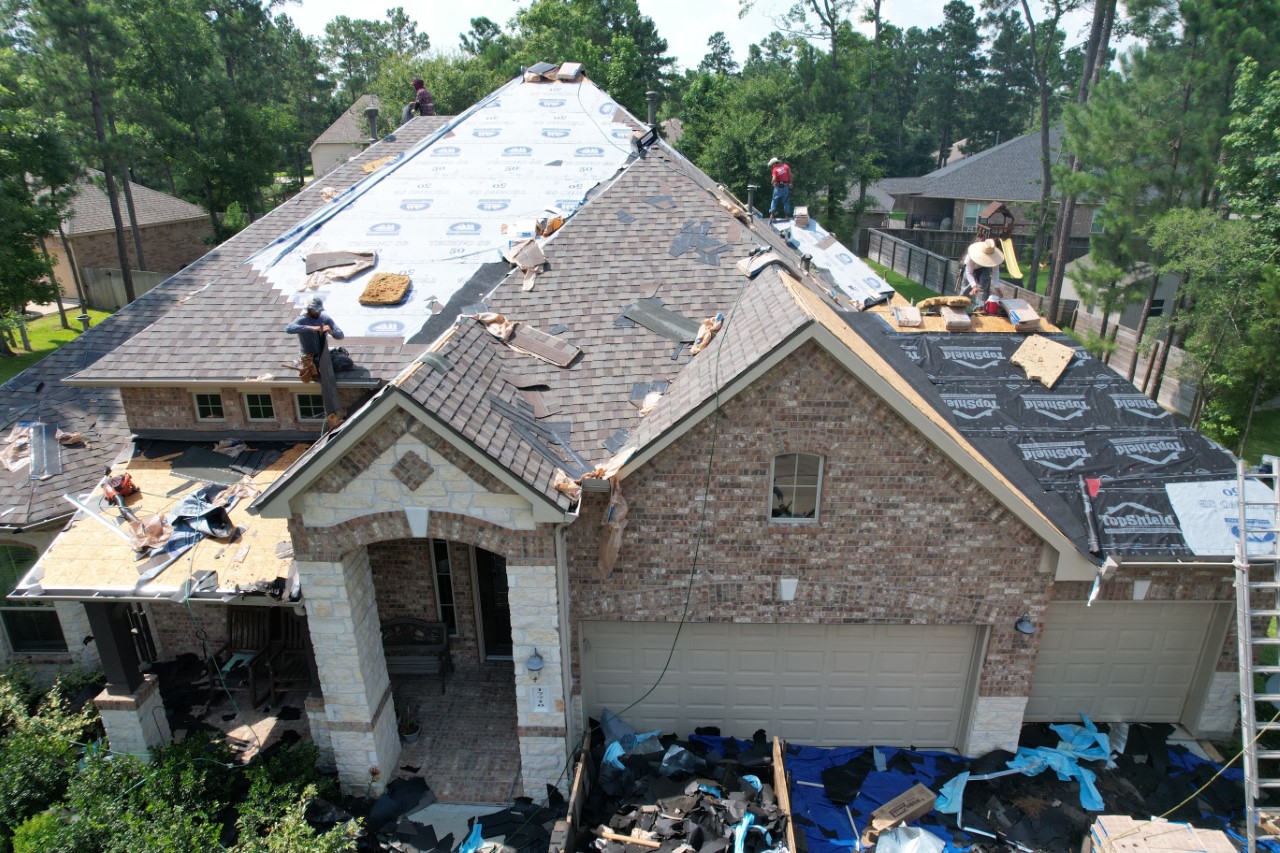
The actual installation typically takes one to three days for most residential roofs, depending on size and complexity. Contractors begin by removing damaged shingles and inspecting the underlying decking for structural issues. Any compromised decking receives replacement before new underlayment and shingles are installed. Proper installation includes careful attention to flashing, ventilation, and sealing to ensure long-term performance.
Quality contractors protect your property throughout the restoration process. Expect comprehensive cleanup including magnetic sweeps to collect stray nails, removal of all debris, and inspection to ensure your property is left in pristine condition.
Working with experienced local contractors who understand the specific challenges of Spring, TX weather patterns ensures your restoration not only addresses current damage but also provides lasting protection. Whether you’re in Katy, Pearland, League City, or anywhere across Harris County and Montgomery County, choosing qualified professionals makes the difference between a roof that simply looks good and one that performs reliably for decades to come.
